Why People Consult Me
Those who consult to are occupied with questions that cannot be answered within the usual framework.
They stand at a threshold — a possible transition into a different life.
A significant, often life-changing decision must be made.
Whoever finds themselves in such a situation feels deeply unsettled — and at the same time completely in the dark.
The future is uncertain, the fear is great.
Added to this: the abilities needed to master the perilous path into a new life are usually not yet developed. This intensifies the fear of the unknown.
This experience — and the fears that come with it — belong to our human condition. Prognostic techniques such as Tarot and dream interpretation are therefore part of our human heritage.
What Happens

Tarot and dream interpretation enable a direct dialogue with our wise inner voice — the one that guides us through life and moves us toward decisions that correspond to our true nature.
This wise inner voice is an archaic force that does not operate according to the laws of reason, but processes emotions and experiences in highly symbolic, metaphorical images.
The rich imagery of Tarot — and the dream world — translates these unconscious contents into a medium that can be read and interpreted.
What to Expect
First Session

Sessions last 90 minutes.
Those who come to me for the first time, I would like to get to know beforehand — ideally in a brief, no-obligation phone or video call.
After booking, clients receive an email with a link to a questionnaire. The answers help me prepare the session effectively and attune to their question and wishes. All information is treated with the utmost confidentiality.
Immediately after the session, clients receive an email with a request for a dream, practical guidance on how to invite and remember dreams, and a dream questionnaire.
Approximately one to two weeks after the session, clients receive a detailed written summary of the reading, including a dream analysis.
Layouts and techniques
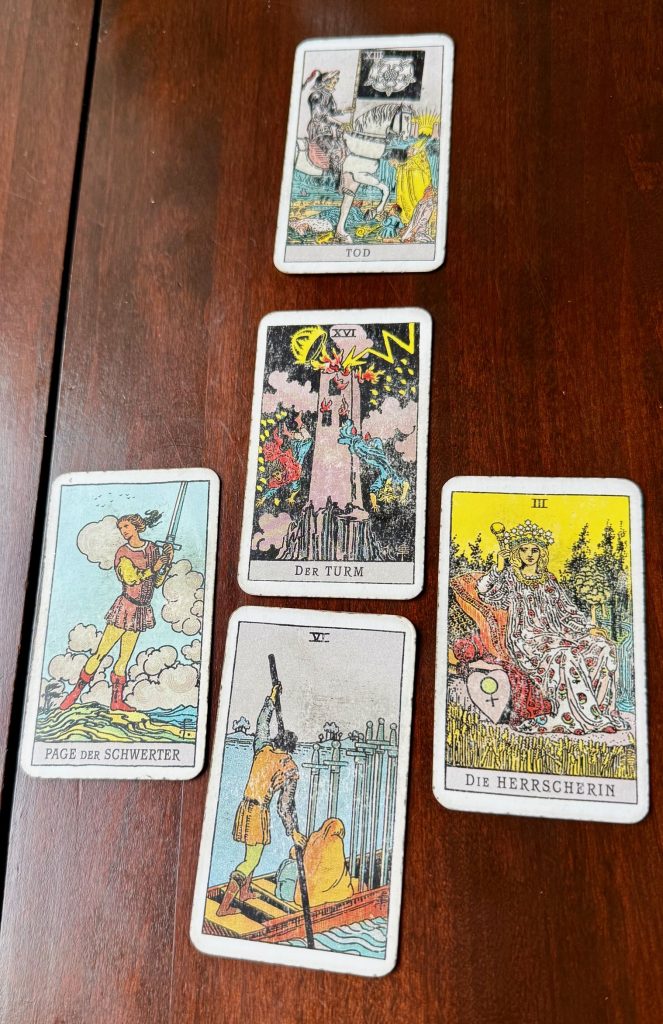
I am familiar with a range of laying techniques. Based on the current question, I decide which technique is most appropriate.
Tarot sets
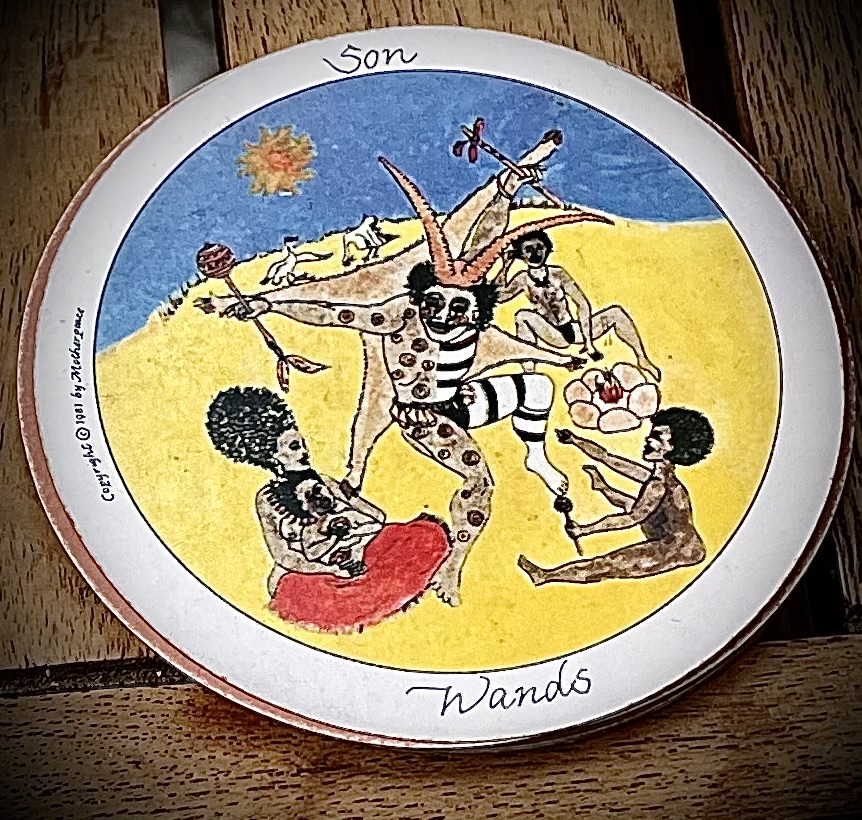
I work with three different Tarot sets.
For those new to Tarot, I recommend the classic Rider-Waite Tarot. Its imagery is clear and accessible.
For those familiar with the Crowley Tarot, I offer readings with this deck. Due to its abstract imagery, the Crowley Tarot is not suitable for beginners.
I also offer readings with the Mother Peace Tarot, a feminist Tarot set with round cards. Its imagery is clear and uncomplicated — no prior experience needed.
Shuffling and laying the cards
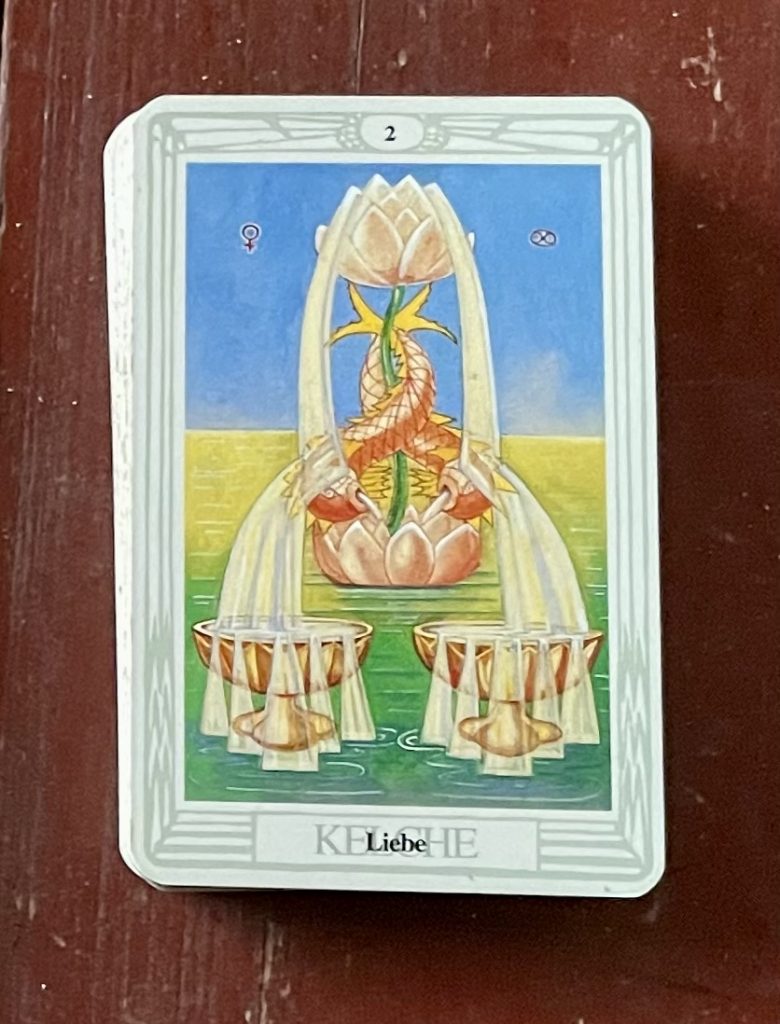
In person, clients shuffle the cards themselves. In Zoom sessions, I shuffle the cards — usually while clients describe their situation and question.
Interpreting the reading: Once the cards are laid out, we work through them together in dialogue. I present the possible meanings of each card, and together we develop a coherent interpretation — first of the individual cards, then of the layout as a whole. The session concludes with a summary of the core message and advice on next steps.
Written Summary and Dreams
After each session, clients receive a detailed written summary of the reading. Dreams that arrive in the days following are an integral part of the work — they often respond directly to what the cards have shown. The dream analysis is included in the written summary.
For Whom the Method is Suitable — and For Whom it is Not
Tarot and dream interpretation are helpful for people who enjoy working with symbols, metaphors and images.
Less suitable for those who prefer rational, structured decision-making.”
Not suitable for people who are highly suggestible, or for those suffering from conditions in the schizophrenic spectrum or at risk of losing touch with reality. As I am not a psychotherapist or physician, I cannot adequately support clients with these conditions.
Possible Side Effects and Recommendation

A Tarot or dream interpretation session can be a strong, sometimes overwhelming experience. The unconscious is powerfully activated. Old, previously suppressed fears and memories may surface. This is part of a deep healing process.
The nervous system usually is setteling again after a few days. Yoga, meditation, and healthy sleep habits are supportive. Keeping a dream journal or daily writing practice can also help accompany the process. In individual cases, psychotherapeutic support may be indicated.
In the days before and after a session, it is advisable to plan for a period of quiet and withdrawal.
Context

Oracles and dream interpretation are not inventions of modern esotericism. They belong to the oldest initiation techniques of humanity — tools that accompany the transition from one phase of life to the next.
The word initiation derives from the Latin initium, meaning “beginning” or “introduction” — a radical transformation of an individual’s status. These rites of passage follow three phases: separation from the old status, the liminal threshold phase, and reintegration into a new status.
In indigenous cultures worldwide, this guidance through rites of passage was a matter of course. What has been relegated to the margins of Western culture was once a fundamental human need.
In Western culture, this accompaniment has largely been lost. Yet the threshold experiences remain:
Biological and biographical thresholds: puberty, pregnancy and birth, menopause, ageing, one’s own death and the death of loved ones.
Relationship thresholds: falling in love, separation and divorce, children growing up and leaving, loss of an important relationship through death or estrangement.
Existential crises: serious illness, burnout, depression — moments when the old life collapses and must be rebuilt.
Social and professional thresholds: entering the workforce, redundancy, retirement, the failure of a project or business, migration and uprootedness.
Spiritual thresholds: loss of faith, religious conversion, mystical experiences, deep meditation experiences — moments when the previous worldview no longer holds.
In traditional cultures, these thresholds were navigated with ritual, community and guidance. In the modern West, they are usually faced alone. The liminal phase — between the old and the new life — can stretch endlessly, or go entirely unrecognised as such.
Tarot and dream interpretation are an attempt to make this ancient accompaniment through threshold situations accessible once more.